
Our take
Meditations is a book to pause over. Its short reflections return to questions that still feel immediate: what deserves your attention, how much another person's praise should matter, and which of your daily activities are actually necessary.
When the moment moves on
Time is like a river made up of the events which happen, and a violent stream; for as soon as a thing has been seen, it is carried away, and another comes in its place, and this will be carried away too.
Book IV, section 43 — George Long translation.
The river passage is one of the illustrated readings below: one event arrives, then gives way to another. The question is what deserves your attention while it is here.
When everything wants your attention
Give thyself time to learn something new and good, and cease to be whirled around.
Book II, section 7 — George Long translation.
This is more demanding than a reminder to slow down. In the surrounding passage, Marcus also questions activity without a purpose. The invitation is to give your attention somewhere worthwhile, rather than merely find another way to stay busy.
A thing can be valuable without applause
Neither worse then nor better is a thing made by being praised.
Book IV, section 20 — George Long translation.
Marcus asks whether praise changes the thing being praised. He moves from beauty to truth and benevolence, then to ordinary objects and a flower. It is a useful passage to sit with when approval begins to feel like the measure of everything you do.
Who might enjoy it
This may suit you if you like compact philosophical passages that leave room for reflection. You can take one section at a time and return to it. If you want a continuous story, characters to follow or a step-by-step modern guide, its reflective form may be a less natural fit.
Reading this translation
The passages here come from George Long's translation, presented by Project Gutenberg as Thoughts of Marcus Aurelius Antoninus. Its wording includes older forms such as “thyself.” That formal voice is part of this edition; other translations can sound quite different.
Print or an ebook makes it easy to pause and reread a section. An audiobook offers another way into the reflections, but check the translator as well as the narrator before choosing: a different translation or revision may not match the passages on this page.
A question to take away
In Book IV, section 24, Marcus asks which actions and thoughts are unnecessary. What could you leave out of today to give something worthwhile more attention?
About the audiobook edition
The prepared audiobook link leads to the Naxos edition narrated by Duncan Steen, using George Long's translation as revised by Steen. Our displayed passages use the original 1862 Long text, so the recording's wording may differ. The edition is listed as unabridged, with a running time of about five hours and nine minutes.
About the paperback edition
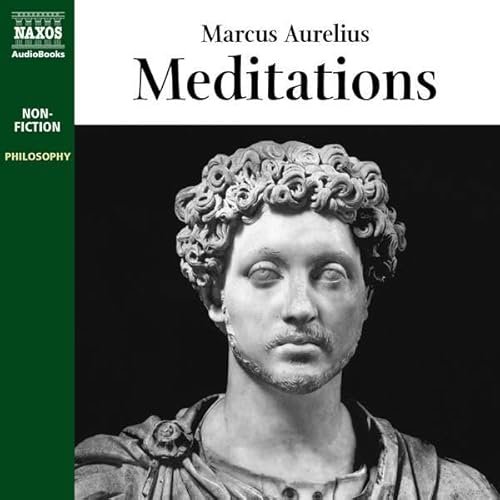
The paperback link leads to Dover Thrift Editions, ISBN 9780486298238. This edition modernizes and revises George Long's translation. It offers a print option for returning to individual sections, but its wording may differ from the original Long passages quoted here. The cover shown on this page belongs to the Naxos audiobook; the Dover paperback has its own cover.
From the book
Passages from the edition identified above. Source locations appear with each excerpt.
The lamp
Our reading: Marcus turns a familiar light into a question about character: if a lamp keeps shining while it lasts, why surrender truth, justice and restraint while we are still alive? The force of the passage comes from the question, rather than a promise that good conduct will be easy.
Does the light of the lamp shine without losing its splendor until it is extinguished? and shall the truth which is in thee and justice and temperance be extinguished [before thy death]?
Marcus Aurelius, Meditations, George Long translation (1862), XII.15. Independent AI reading; not the Duncan Steen/Naxos audiobook recording. · verified verbatim
Headland
Our reading: The headland image puts steadiness beside repeated pressure. The waves keep coming; the passage locates resilience in how the rock meets them, rather than in a world without disturbance.
Be like the promontory against which the waves continually break, but it stands firm and tames the fury of the water around it.
Marcus Aurelius, Meditations, George Long translation (1862), IV.49, opening paragraph. Independent AI reading; not the Duncan Steen/Naxos audiobook recording. · verified verbatim
Marcus Aurelius
Our reading: The river image gives change both speed and force. Marcus repeats the movement from one event to the next, including the replacement event's own disappearance. The sentence makes impermanence something the reader can picture.
Time is like a river made up of the events which happen, and a violent stream; for as soon as a thing has been seen, it is carried away, and another comes in its place, and this will be carried away too.
Marcus Aurelius, Meditations, George Long translation (1862), IV.43. Independent AI reading; not the Duncan Steen/Naxos audiobook recording. · verified verbatim
Get Meditations (Thoughts of Marcus Aurelius Antoninus)
Werbung
Werbung — this page contains affiliate links. If you buy through them I may earn a small commission, at no extra cost to you.
As an Amazon Associate I earn from qualifying purchases.
Explore the audiobook on AmazonDuncan Steen narration; George Long translation revised by Duncan Steen. Wording may differ from our excerpt. Explore the Dover paperback on AmazonDover Thrift Editions paperback; modernized revision of George Long's translation. Wording may differ from our excerpt.Visuals are AI-generated.